
Charter jet aircraft Chicago
This guide covers the aircraft you can book for a Chicago charter. Rates run from $2,200 an hour for a turboprop to $14,500 for a heavy jet. Cabins, ranges and runway needs follow below.
- Home
- Fleet
Chartering out of Chicago means picking an aircraft that fits the trip, not the brochure. A hop to St. Louis is 231 nm and finishes in 0h 52m in a light jet, while a run to San Francisco covers 1,623 nm and takes 5h 01m. The fleet you see here reflects what actually operates around Chicago Executive, Midway, O'Hare and Gary/Chicago International. Every quotation we arrange is flown by an operator holding FAA Part 135 authority and operational control; we act as your agent under DOT Part 295 and do not own aircraft.
The right charter jet aircraft Chicago choice depends on runway and density altitude, not just cabin size. July density altitude at Chicago Executive reaches 2,300 ft, and at 115F it climbs to 2,800 ft, which matters for a fully loaded light jet on a 5,001 ft runway. Gary/Chicago International gives you 8,859 ft for the longer legs, and O'Hare offers 13,000 ft. Those numbers drive which aircraft can leave with full fuel and a full cabin on a hot afternoon.
Turboprop
Turboprops run $2,200 to $3,500 an hour and cruise near 300 kt, with a typical range of 1,500 nm. For Chicago work they shine on short legs and out of shorter fields, and they burn less fuel per seat. If your trip is under about 400 nm and the passenger count is modest, a turboprop often beats a light jet on cost without a meaningful time penalty. Both aircraft in this class are unpressurized-cabin-adjacent in feel but genuinely capable in winter weather.
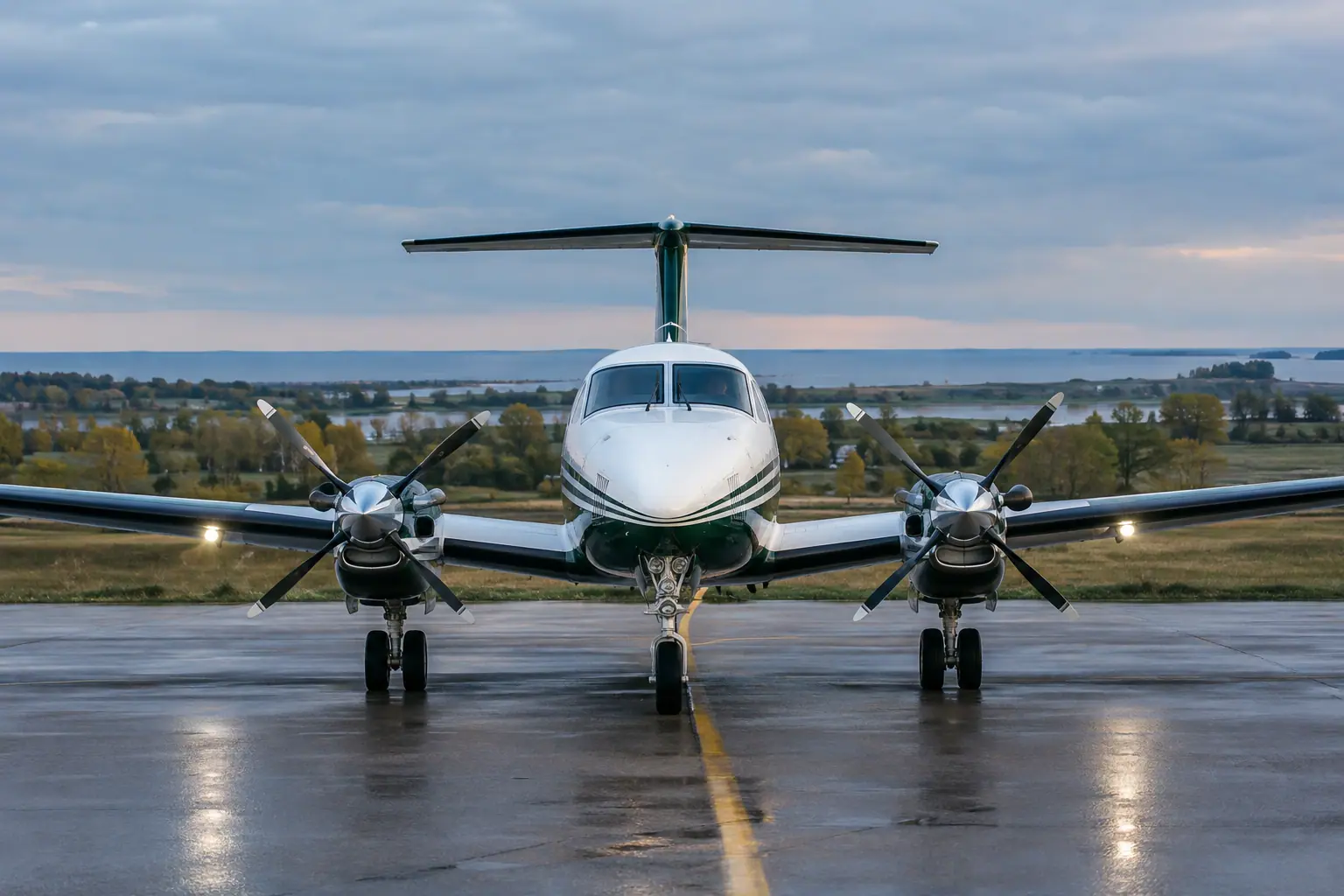
Daher TBM 960
- 6 seats
- 330 kt cruise
- 1,730 nm range
Beechcraft King Air 350i
- 8 seats
- 312 kt cruise
- 1,800 nm range
The King Air 350i seats 8, cruises at 312 kt and reaches 1,800 nm, with a cabin 4 ft 9 in tall and 16 ft 8 in long. It is the short-leg and small-field specialist in this fleet, and its 55 cu ft baggage compartment swallows ski and golf bags. If you fly Chicago to Minneapolis with a full cabin, the King Air lands with reserve and lower cost. It handles winter weather with known-ice equipment and turboprop efficiency.
Light jet
Light jets quote $3,800 to $5,800 an hour, cruise around 430 kt and cover a typical 1,400 nm with 4 to 7 passengers. From Chicago that reaches most of the eastern U.S. nonstop, and it is the workhorse class for business day trips to New York, Atlanta or Dallas. Baggage space is real but limited; a CJ4 Gen2 gives you 71 cu ft. When you carry four passengers and golf bags to Miami, a light jet keeps the price under a midsize.
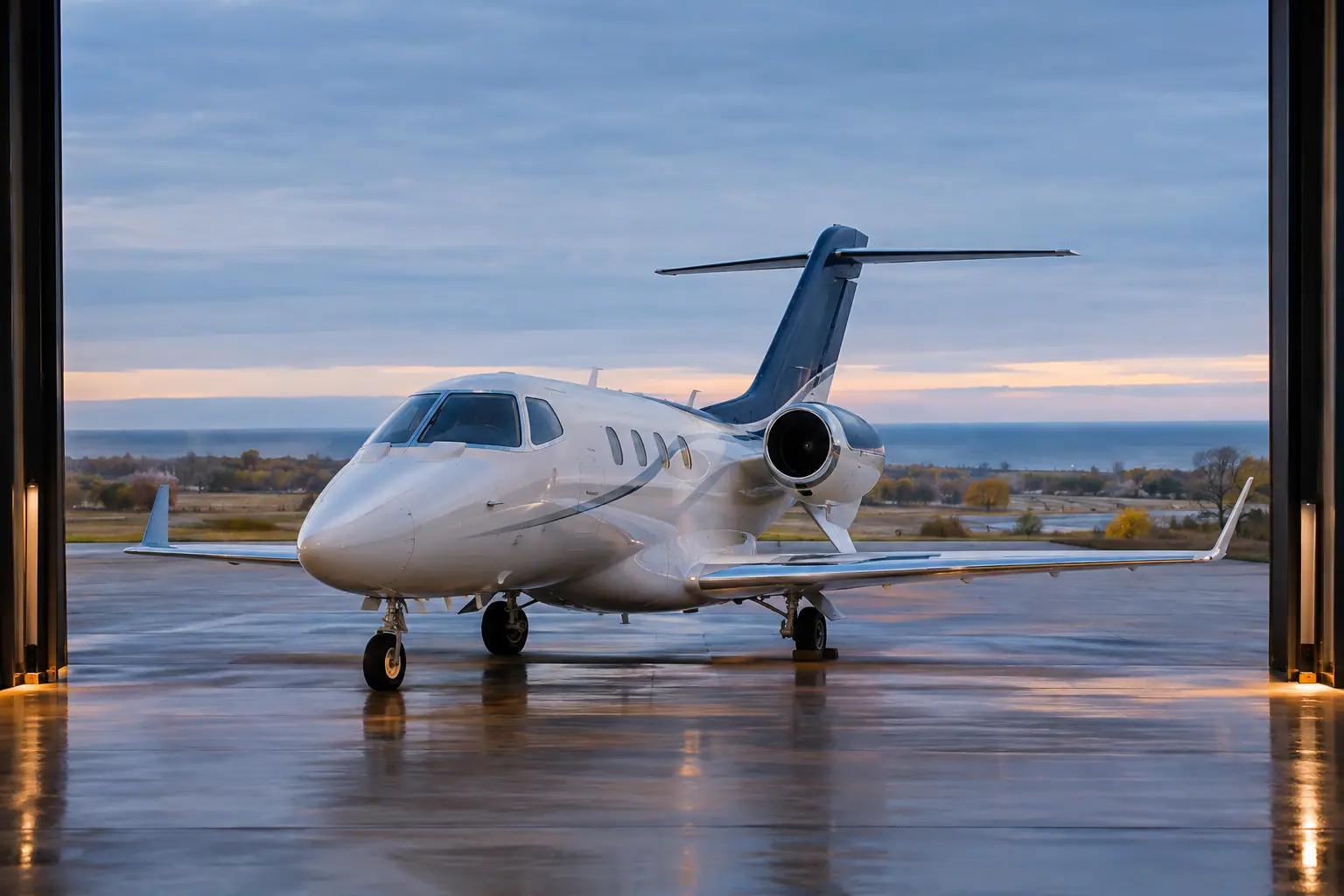
Cessna Citation CJ4 Gen2
- 7 seats
- 451 kt cruise
- 2,165 nm range
The CJ4 Gen2 carries 7 at 451 kt for 2,165 nm, with a 4 ft 9 in by 17 ft 4 in cabin and 71 cu ft of baggage. It is the most flexible light jet here, reaching Denver at 803 nm and Miami at 1,007 nm nonstop from Chicago. When four passengers need Chicago to Miami in 2h 46m, the CJ4 handles it with baggage to spare. Single-pilot certified and efficient on short legs.
Embraer Phenom 300E
- 7 seats
- 464 kt cruise
- 2,010 nm range
Midsize jet
Midsize jets run $5,200 to $7,800 an hour with 7 to 9 seats, 440 kt cruise and about 2,100 nm of range. The cabin is stand-up in most models, which changes how a 4-hour leg feels. If a Chicago-to-Los Angeles flight carries eight people, a midsize jet often prices better per seat than two light jets, and the Citation XLS+ adds 90 cu ft of baggage. Expect to use O'Hare or Gary when summer density altitude is high.
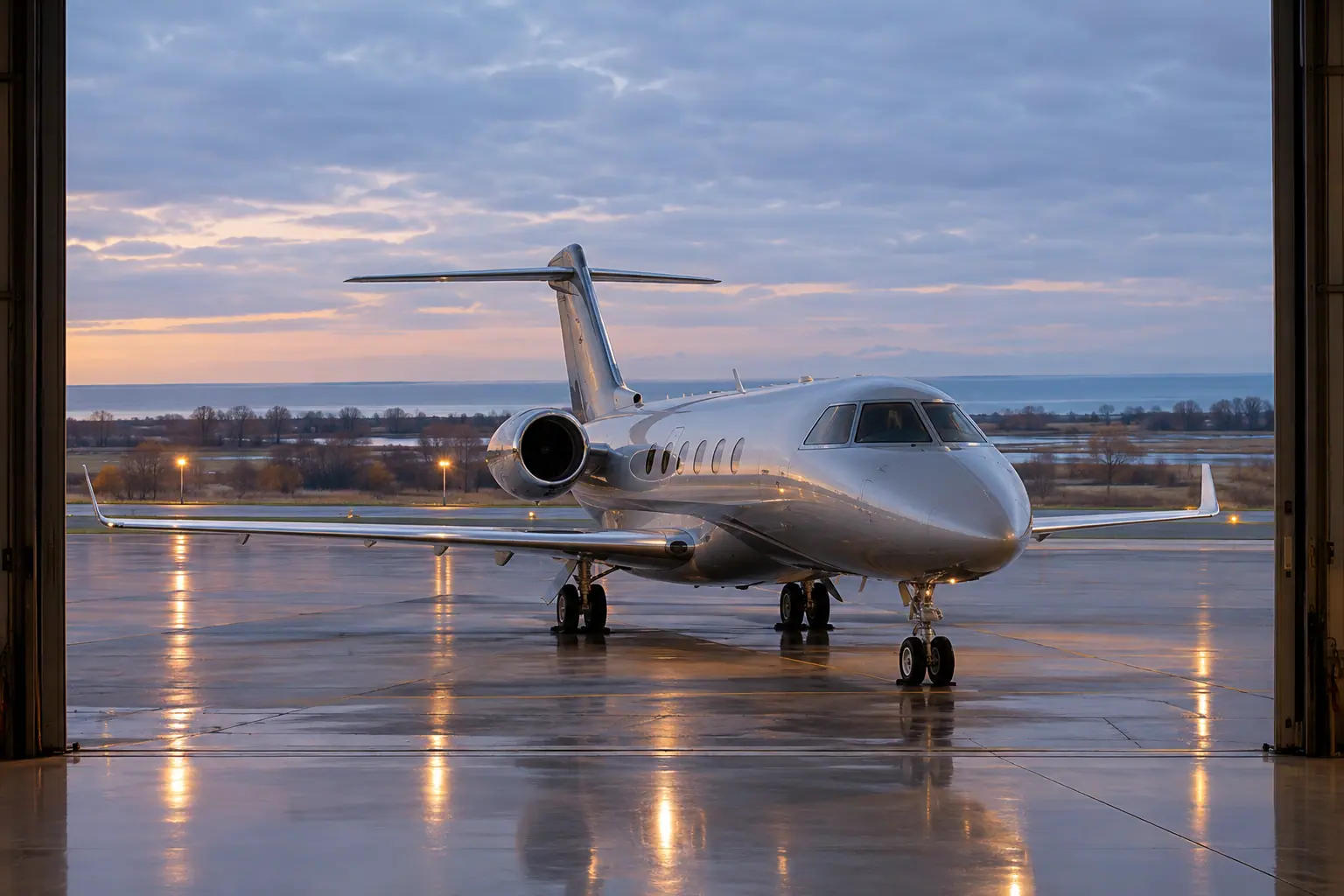
Cessna Citation Latitude
- 9 seats
- 446 kt cruise
- 2,700 nm range
Hawker 800XP
- 8 seats
- 447 kt cruise
- 2,540 nm range
The Hawker 800XP seats 8, cruises at 447 kt and ranges 2,540 nm, with a 5 ft 9 in by 21 ft 4 in cabin and 50 cu ft of baggage. It is a classic midsize with a stand-up cabin and honest short-field behavior. If you fly Chicago to Los Angeles at 1,528 nm with eight aboard, the Hawker makes it nonstop. Baggage space is the trade-off; pack accordingly on longer family trips.
Super-midsize jet
Super-midsize aircraft quote $7,200 to $10,000 an hour, seat 8 to 10 and reach 3,200 nm at roughly 470 kt. They open nonstop coast-to-coast work from Chicago, including Los Angeles at 1,528 nm and San Francisco at 1,623 nm. The G280 and Citation X+ both have stand-up cabins and generous baggage. For a Chicago-to-San Francisco run with nine passengers, a super-midsize jet removes the fuel stop entirely.
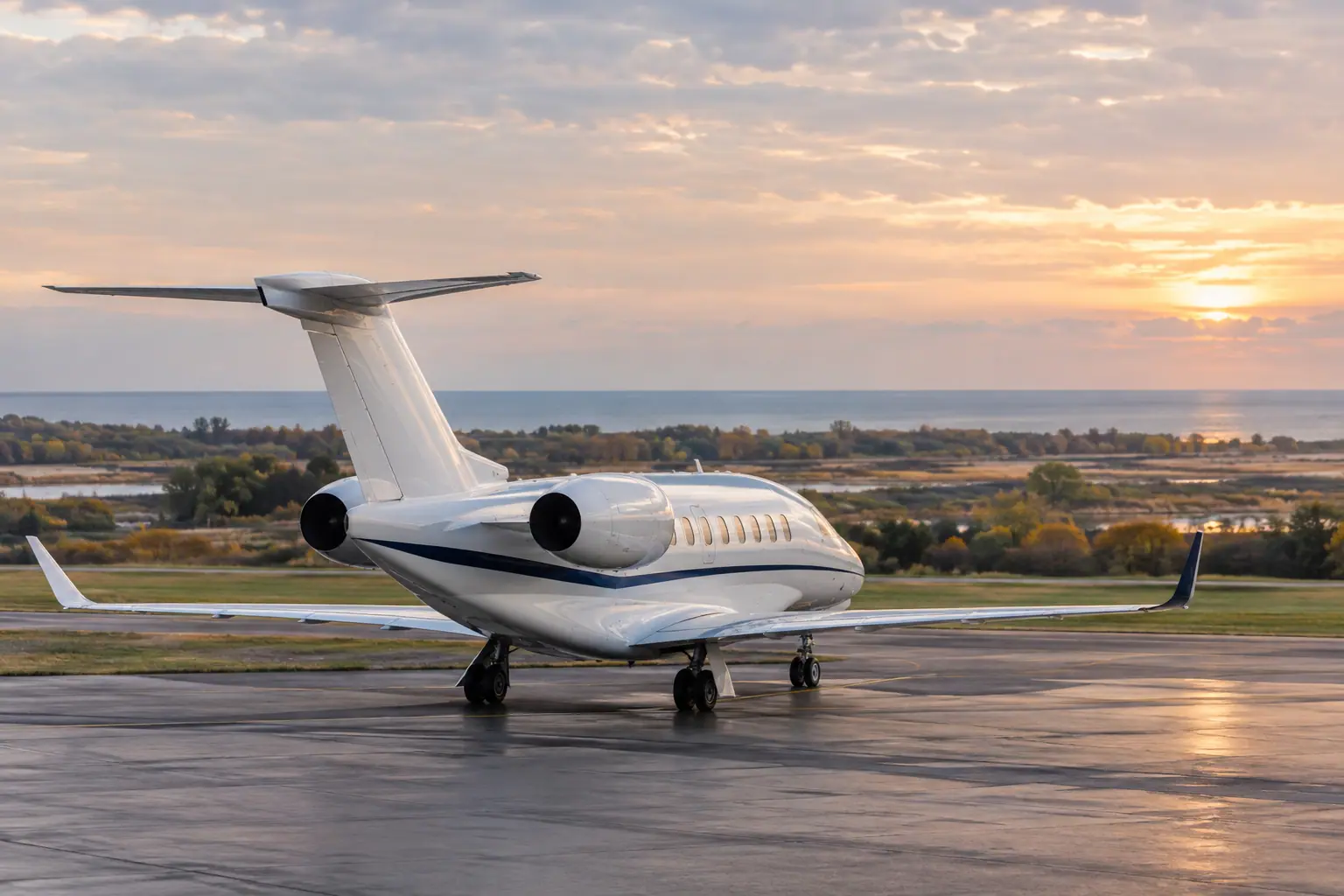
Bombardier Challenger 350
- 10 seats
- 470 kt cruise
- 3,200 nm range
Gulfstream G280
- 9 seats
- 482 kt cruise
- 3,600 nm range
The G280 seats 9, cruises at 482 kt and reaches 3,600 nm, with a 6 ft 3 in by 25 ft 10 in cabin and 154 cu ft of baggage. It is the roomiest super-midsize here and handles coast-to-coast Chicago legs with margin. If you fly Chicago to San Francisco at 1,623 nm with nine passengers, the G280 leaves nothing behind. The cabin height makes a five-hour leg genuinely comfortable.
Heavy jet
Heavy jets run $9,500 to $14,500 an hour, carry 10 to 14 and stretch to 4,000 nm. From Chicago they cover transcontinental and transatlantic legs without a stop, and the cabin is a genuine office or a place to sleep. When the trip is Chicago to Europe with twelve passengers, a heavy jet is the only single-aircraft answer in this fleet. Expect runway and parking constraints at smaller fields; O'Hare and Gary/Chicago International handle them comfortably.
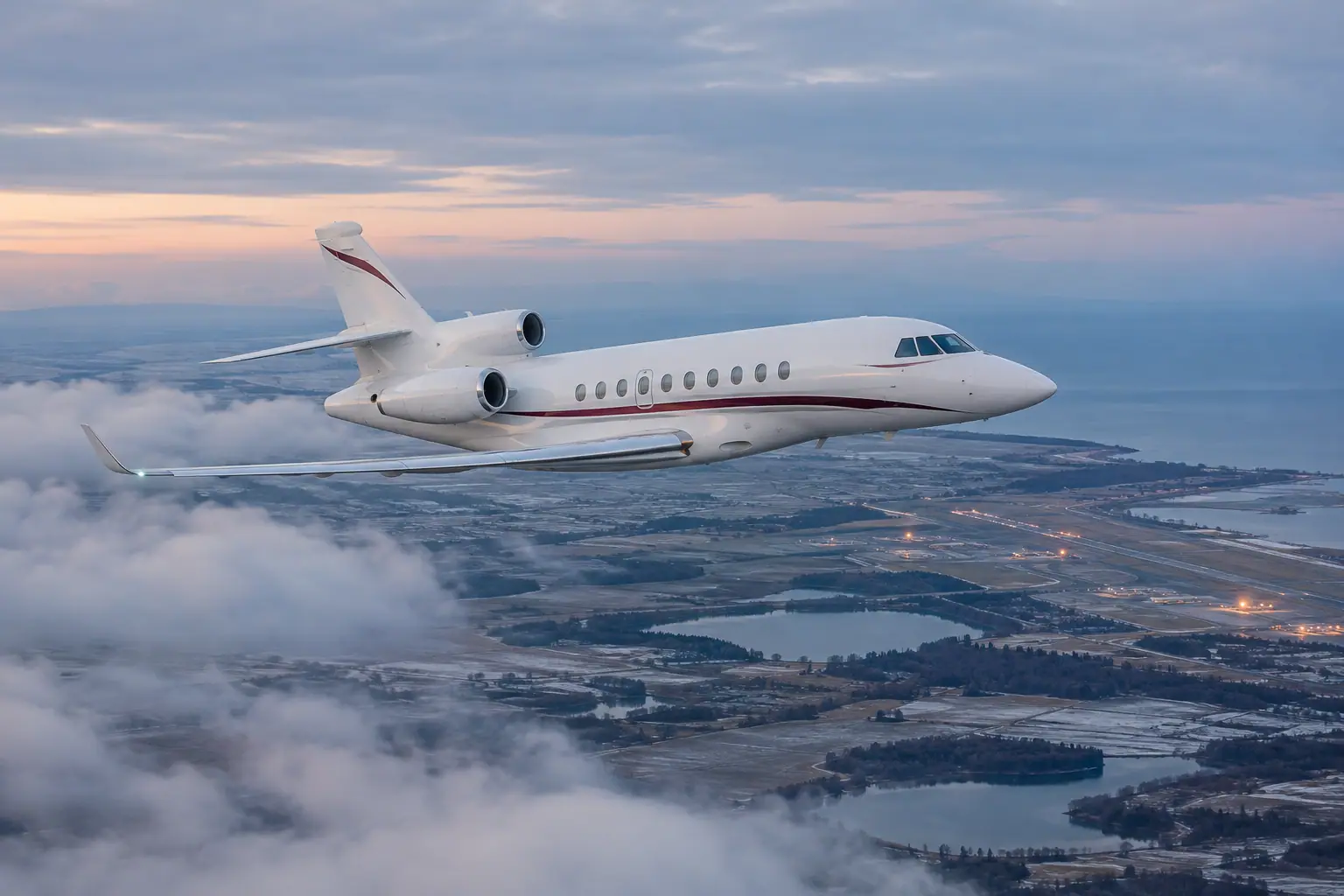
Gulfstream G450
- 14 seats
- 476 kt cruise
- 4,350 nm range
Bombardier Challenger 650
- 12 seats
- 470 kt cruise
- 4,000 nm range
The Challenger 650 seats 12, cruises at 470 kt and ranges 4,000 nm, with a 6 ft 2 in by 28 ft 4 in cabin and 115 cu ft of baggage. It is the standard heavy for transcontinental work from Chicago. If twelve passengers need Chicago to Los Angeles nonstop, the 650 does it with a full cabin and bags. Wide cabin, flat floor and a reputation for reliability.
How to narrow the fleet for Chicago
Start with the trip length and the passenger count, then let runway and density altitude trim the field. If your Chicago trip runs under 400 nm with six or fewer people, a turboprop or light jet keeps cost and runway needs low. At 231 nm to St. Louis, a light jet quotes $4,000 to $6,000 and finishes in 0h 52m; a turboprop is cheaper per hour but slower. For 1,528 nm to Los Angeles, a light jet is $18,000 to $27,500 and a super-midsize removes the fuel stop.
Then check the field. O'Hare's 13,000 ft runway handles every aircraft here, while Chicago Executive's 5,001 ft favors turboprops and light jets when July density altitude hits 2,300 ft or 2,800 ft at 115F. Gary/Chicago International, with 8,859 ft, is the sensible heavy-jet alternative 1,534 miles from the strip. When summer heat and a full cabin arrive together, planning out of Gary protects the fuel load. Confirm CBP arrangements for any international leg before quoting.
Questions
What does a charter jet aircraft Chicago flight cost?
Hourly rates in this fleet run from $2,200 for a turboprop to $14,500 for a heavy jet, and route quotes are door to door. A light jet from Chicago to New York at 604 nm is $6,500 to $10,500, while Chicago to Los Angeles at 1,528 nm is $18,000 to $27,500. These are estimates and move with fuel, crew duty and availability.
Which airport near Chicago do charter jets use?
Most pick Chicago Executive (KPWK) for its 5,001 ft runway and three FBOs, Midway for its 6,522 ft runway and two FBOs, or O'Hare with its 13,000 ft runway. Gary/Chicago International offers 8,859 ft and is often the heavy-jet choice. The right field depends on aircraft size, density altitude and where you start.
How fast is a charter jet from Chicago to Miami?
A light jet covers the 1,007 nm Chicago-to-Miami route in 2h 46m, with quotes of $10,500 to $16,000. A midsize or super-midsize flies the same distance with a larger cabin and more baggage. Block time varies with winds, routing and departure field, so build slack into tight connections.
Can a light jet leave Chicago Executive in July heat?
Yes, but payload matters. Chicago Executive's 5,001 ft runway and 2,300 ft July density altitude (2,800 ft at 115F) limit a fully loaded light jet on longer legs. If your party sits at the top of the cabin count on a hot afternoon, plan out of Midway or Gary/Chicago International, or step up to a midsize with better climb performance.
Who operates the aircraft I charter?
The flights are flown by operators holding FAA Part 135 authority and operational control of the aircraft. We arrange the trip as your agent under DOT Part 295 and do not own the fleet. Safety oversight, crew duty and maintenance sit with the operator, and your quote identifies who is flying.
What is the range of the largest jet in this fleet?
The Falcon 900LX reaches 4,750 nm, enough for Chicago to Europe nonstop with twelve passengers. The Challenger 650 covers 4,000 nm. For domestic work, the G280 and Citation X+ at 3,600 and 3,460 nm handle every coast-to-coast route from Chicago without a fuel stop.
Do turboprops make sense for short Chicago trips?
On short legs they often do. At $2,200 to $3,500 an hour and 300 kt, a turboprop handles Chicago to Minneapolis at 321 nm in 1h 05m and fits shorter runways. For the same trip a light jet quotes $4,000 to $6,500, so the turboprop saves money with a modest time penalty.