
Charter jet airports Chicago
Chicago has four main airports for charter jets. Gary/Chicago International offers an 8,859-foot runway, while Chicago Executive has three FBOs. This guide helps you choose based on your itinerary, aircraft, and ground time.
- Home
- Airports
When you book a charter jet airports Chicago selection matters more than most travelers realize. Gary/Chicago International (GYY) sits 1,534 miles from the Strip, but its 8,859-foot runway handles heavy jets on long-haul routes. Chicago Executive (PWK) is closer to the northern suburbs, with a 5,001-foot runway and three FBOs: Atlantic Aviation, Signature Aviation, and Ascension FBO Network. Midway (MDW) and O'Hare (ORD) are airline hubs but accept charter flights, with Signature and Atlantic on the field.
A light jet from St. Louis to Chicago runs about $4,000 to $6,000 one way. That 231-nautical-mile leg takes 52 minutes in a light jet. For longer trips, a light jet from Los Angeles costs $18,000 to $27,500 and takes 4 hours 47 minutes. Midsize jets cruise at 440 knots and carry 7-9 passengers, while heavy jets seat 10-14 and cruise at 470 knots. On summer days, density altitude at PWK peaks around 2,800 feet at 115°F, so operators may adjust performance calculations.
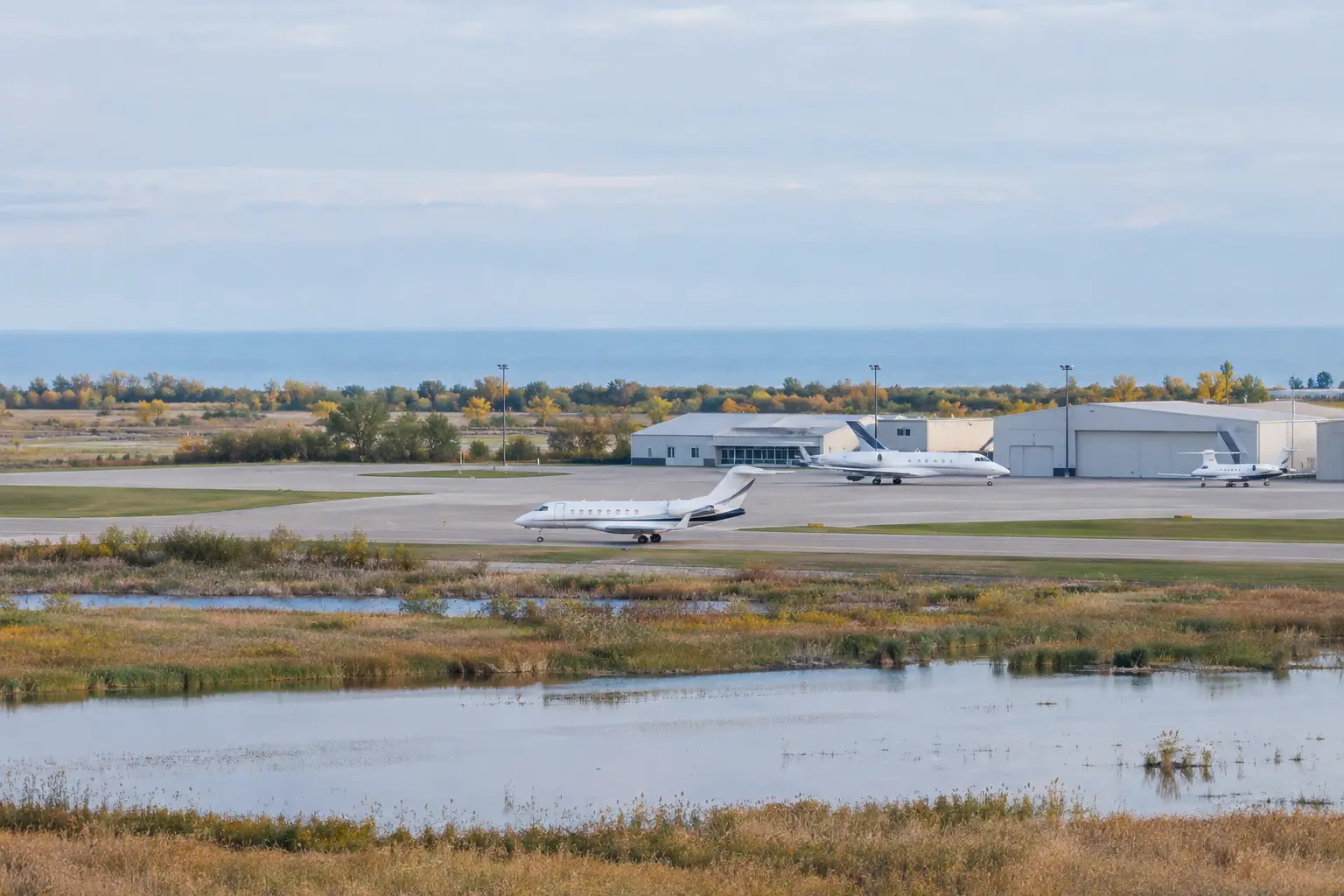
Gary/Chicago International Airport
- KGYY code
- 591 ft elevation
2 runways, longest 8,859 ft. 20 mi to the Loop.
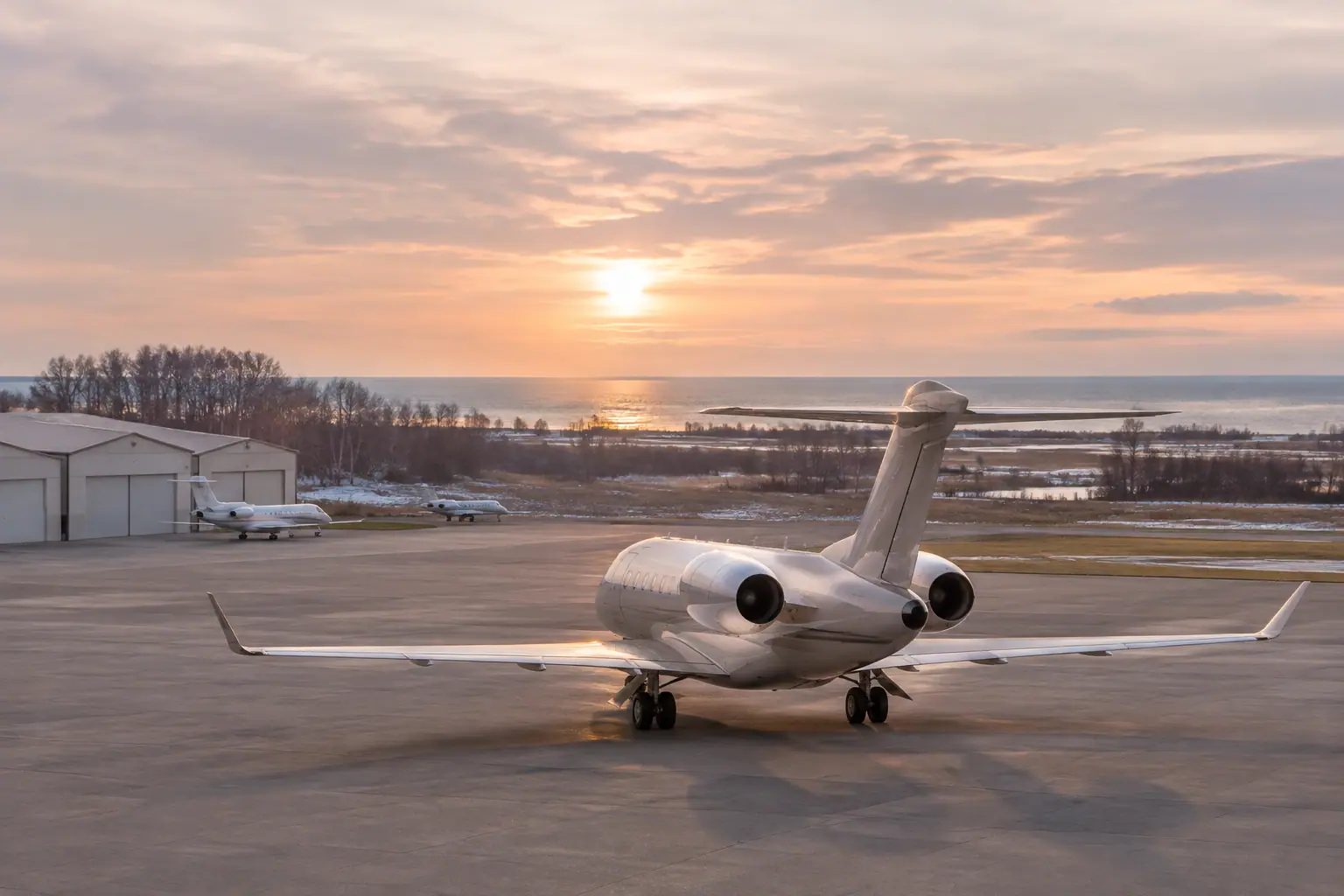
Chicago Executive Airport
- KPWK code
- 647 ft elevation
2 runways, longest 5,001 ft. 22 mi to the Loop.FBOs: Atlantic Aviation, Signature Aviation, Ascension FBO Network.
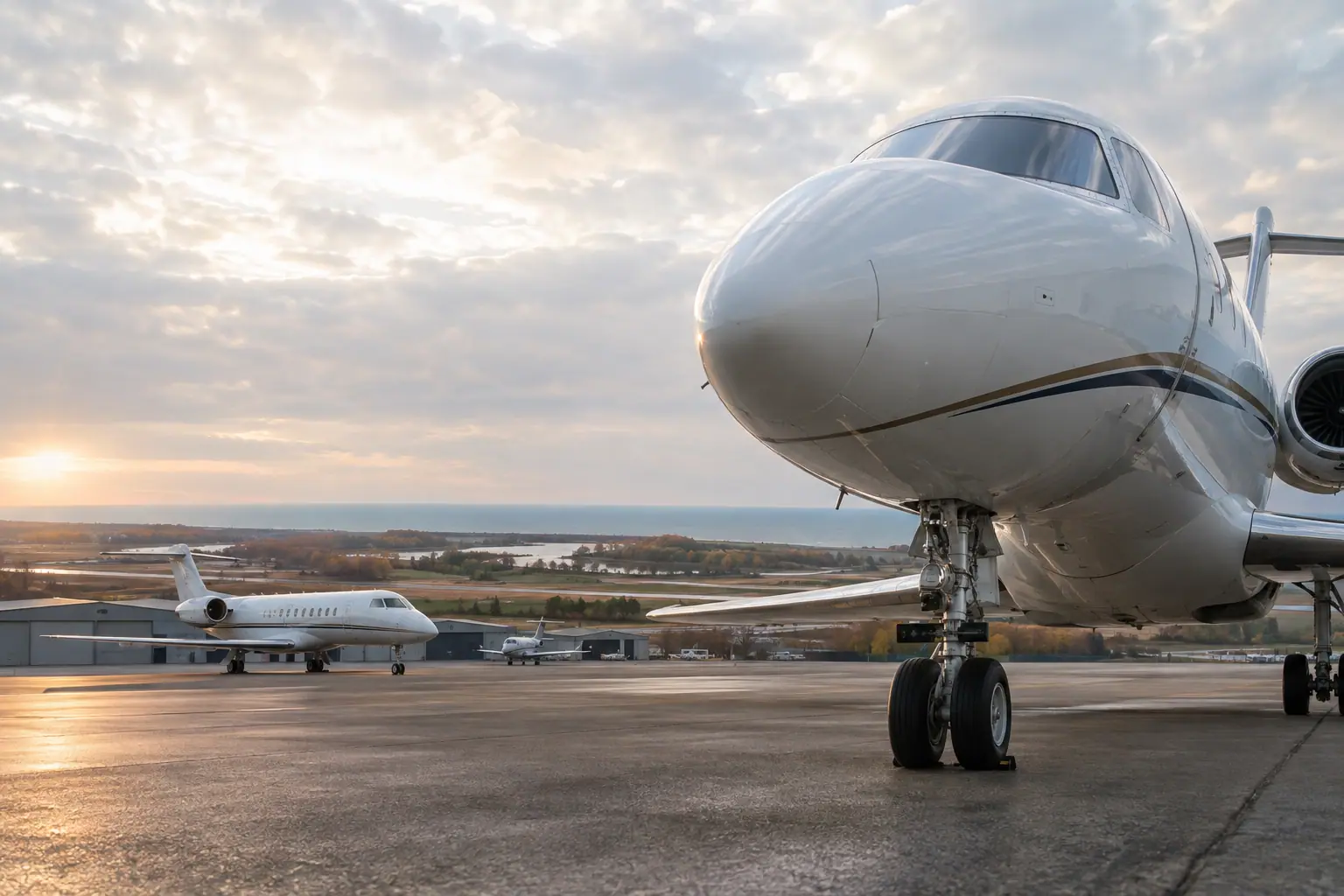
Chicago Midway International Airport
- KMDW code
- 620 ft elevation
4 runways, longest 6,522 ft. 7 mi to the Loop.FBOs: Atlantic Aviation, Signature Aviation.
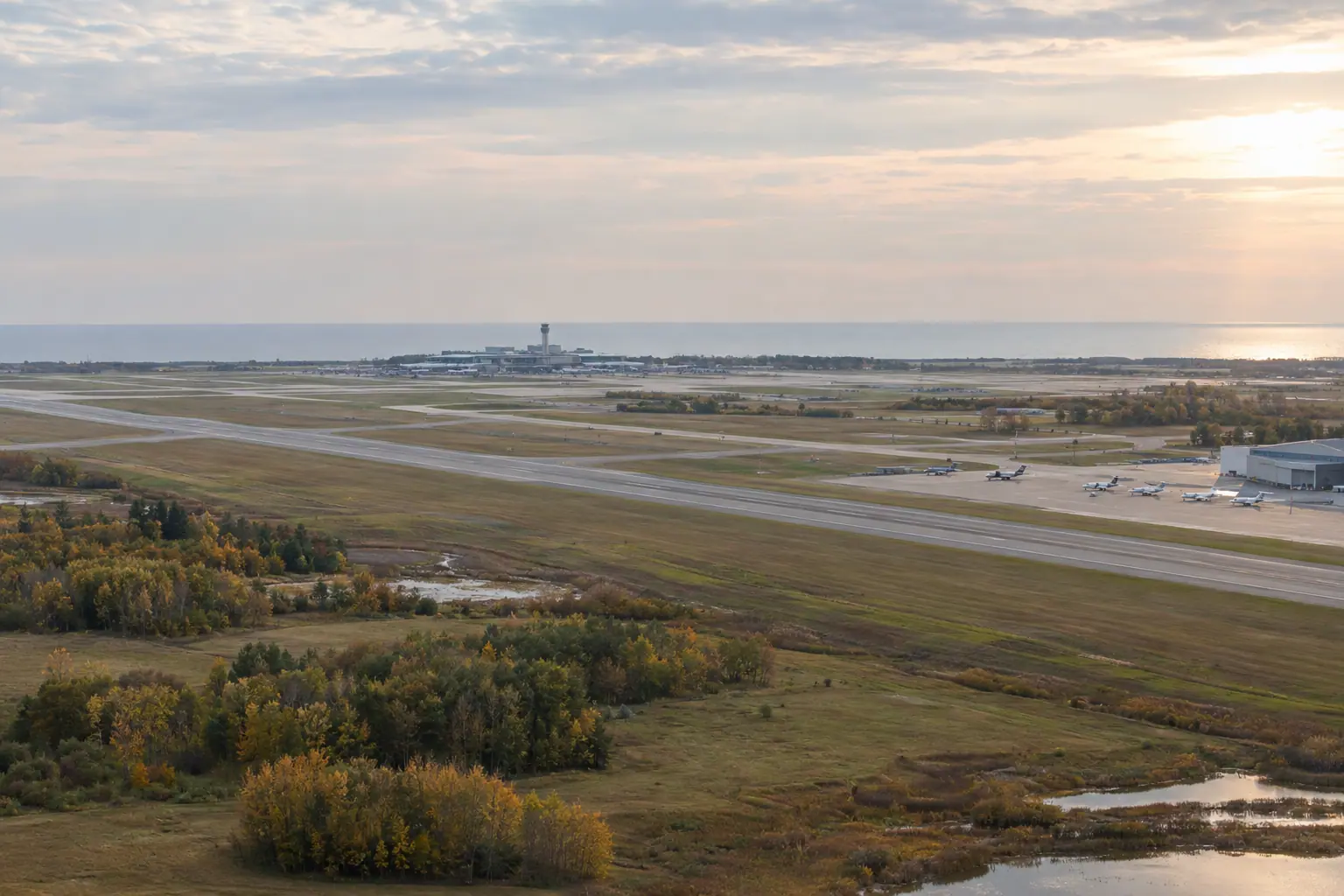
Chicago O'Hare International Airport
- KORD code
- 680 ft elevation
8 runways, longest 13,000 ft. 16 mi to the Loop.FBOs: Signature Aviation.
Charter jet airports Chicago comparison
Gary/Chicago International has the longest runway at 8,859 feet and sits at 591 feet elevation. It is the best choice for heavy jets on transcontinental routes because the long runway allows higher takeoff weights. However, it is in Indiana and requires a longer drive to downtown Chicago. If your trip originates in northwest Indiana, then GYY saves you drive time and often reduces taxi delays. The airport has no FBOs listed, so ground services are arranged through the operator. Chicago Executive has a 5,001-foot runway at 647 feet elevation and three FBOs to choose from. PWK is convenient for the northern suburbs and business parks along the Tri-State Tollway. When you need a quick turn and multiple FBO options, then PWK gives you flexibility if one ramp is busy. Midway and O'Hare both have runways over 6,500 feet, but they are airline hubs with more congestion. If your schedule is tight, then PWK or GYY usually means less waiting for a slot. For international arrivals, CBP clearance must be arranged in advance at any of these airports.
| Airport | Field elev. | Longest runway | To the Loop | July density alt. |
|---|---|---|---|---|
| Gary/Chicago International Airport | 591 ft | 8,859 ft | 20 mi | 2,200 ft |
| Chicago Executive Airport | 647 ft | 5,001 ft | 22 mi | 2,300 ft |
| Chicago Midway International Airport | 620 ft | 6,522 ft | 7 mi | 2,200 ft |
| Chicago O'Hare International Airport | 680 ft | 13,000 ft | 16 mi | 2,300 ft |
Summer heat and density altitude
July density altitude at Chicago Executive reaches about 2,300 feet, and peaks near 2,800 feet at 115°F. That affects turboprops and light jets more than heavy jets. A turboprop cruising at 300 knots may see reduced climb rates on hot afternoons. If you are flying a light jet with four passengers on a 1,400-nautical-mile trip, then a hot day at PWK might require a fuel stop. Gary/Chicago International has a similar peak density altitude of 2,700 feet, but its longer runway offsets some of the performance loss.
Midway and O'Hare both see peak density altitudes around 2,800 feet at 115°F. O'Hare's 13,000-foot runway handles any business jet at full weight, even in July. When planning summer departures, if your aircraft is a turboprop or light jet, then schedule morning or evening flights to avoid the highest density altitudes. The FAA requires operators to calculate takeoff and landing distances using current conditions, so your crew will adjust as needed. For international departures, CBP and TSA procedures apply at all four airports.
Questions
Which Chicago airport has the longest runway for charter jets?
O'Hare has the longest runway at 13,000 feet, followed by Gary/Chicago International at 8,859 feet. O'Hare's runway can handle any heavy jet at maximum takeoff weight, even on hot days. Gary's runway is the longest at a relief airport, making it a good option for large jets when O'Hare is congested. Chicago Executive and Midway have shorter runways but still accommodate most light and midsize jets.
What is the typical cost for a charter jet from Chicago to New York?
A light jet from Chicago to New York (604 nautical miles) typically costs between $6,500 and $10,500 one way. Flight time is about 1 hour 46 minutes. Midsize jets cost more but offer more cabin space. Prices are estimates and vary with aircraft availability, date, and additional fees. For a more precise quote, provide your travel dates and passenger count.
How does density altitude affect charter jet operations in Chicago?
In July, density altitude at Chicago airports can reach 2,300 feet, and up to 2,800 feet at 115°F. High density altitude reduces aircraft performance, especially for turboprops and light jets. Operators must calculate takeoff distances and may need to reduce weight or fuel. If you are flying on a hot day, your crew might adjust the flight plan or schedule to ensure safety.
Can I clear customs at Chicago airports for an international charter jet arrival?
Yes, but CBP clearance must be arranged in advance at all four airports. O'Hare has full-time customs facilities, while other airports may require prior notice. For international arrivals, the operator must file an eAPIS manifest and coordinate with CBP. If you are flying from Canada or Mexico, then allow extra time for customs processing. TSA screening may also apply depending on the airport and operator.
Which FBOs are available at Chicago Executive Airport?
Chicago Executive has three FBOs: Atlantic Aviation, Signature Aviation, and Ascension FBO Network. Each offers fueling, hangar space, and pilot amenities. Having multiple FBOs means more competition and often better service. If one FBO is busy, then the operator can often use another. For specific services, contact the FBO directly or ask your charter broker.
What is the flight time from Chicago to Los Angeles on a light jet?
A light jet from Chicago to Los Angeles (1,528 nautical miles) takes about 4 hours 47 minutes. Typical cost is $18,000 to $27,500 one way. This is near the maximum range for many light jets, so operators may limit passenger count or baggage. Midsize or super-midsize jets offer more comfort on this route. Prices are estimates and subject to change.